
Imagine your most sensitive work files, your country's strategic plans, being silently siphoned off without you even noticing. This isn't a spy movie plot; it's the new reality forcing Denmark to take drastic measures. If you rely on Bluetooth for everyday convenience, you'll want to know why Danish officials are being told to disconnect, and what it means for your own digital security.
The Greenland Crisis and the Unexpected Threat
Geopolitical tensions are escalating, and right now, the Arctic region, particularly Greenland, is at the center of a complex dispute. The Danish government has issued an extraordinary security directive, requiring certain public officials to disable Bluetooth technology on their devices. The reason? A direct threat of cyber espionage linked to the ongoing diplomatic challenges surrounding Greenland’s governance and its valuable natural resources.
Greenland: More Than Just Ice
Greenland, an autonomous part of the Kingdom of Denmark, has become a focal point for global powers due to its strategic location and significant deposits of rare earth metals. Intelligence reports indicate that the risk of eavesdropping and data theft by foreign state actors is so severe that conventional security measures may no longer be sufficient. This has led to a surprising, yet practical, solution.
Bluetooth: The Weak Link in Our Digital Armor
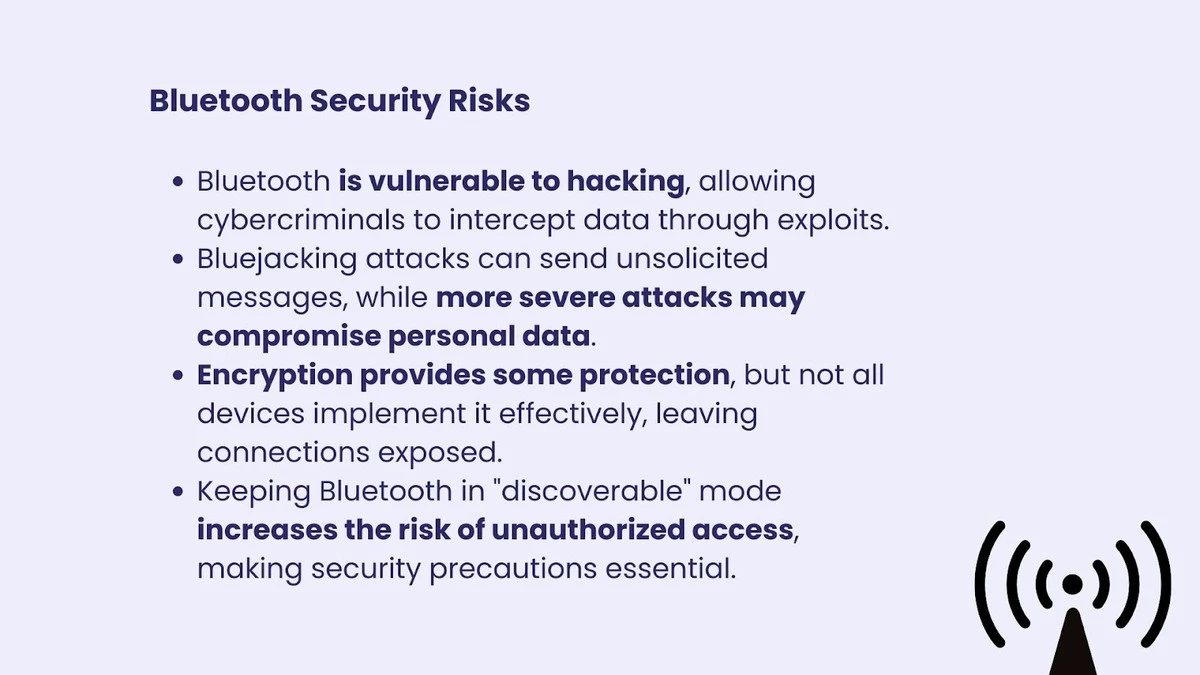
We often feel secure with Bluetooth because it’s designed for short-range communication. But here's the unsettling truth: modern espionage techniques, according to various sources, can intercept signals or exploit vulnerabilities in its protocols from dozens of meters away. In diplomatic settings, this means an operative could be lurking near a building or hotel where officials, perhaps using wireless earbuds, are discussing sensitive matters.
This situation highlights that threats aren't always about clicking a malicious link. Attacks are becoming more sophisticated and can allow adversaries to:
- Gain unauthorized control over devices.
- Access sensitive messages and confidential information.
- Remotely activate microphones for eavesdropping.
It’s why Danish officials are being advised to switch back to traditional wired headphones and mice – a step towards prioritizing security over convenience.
A Return to Wired Accessories for Security
This measure primarily affects officials in sectors like the Ministry of Defense, foreign affairs, and government offices directly involved with Arctic affairs. The government’s directive extends beyond simply turning off Bluetooth on phones and laptops. It also includes a ban on using any wireless accessories in secure areas. This means not just headphones, but also keyboards, smartwatches, and any other wirelessly connected peripherals are now problematic.
Bluetooth has long been considered a relatively vulnerable communication channel. It can be exploited to infiltrate devices without the user's knowledge. The fear that strategic plans regarding Greenland could fall into the hands of foreign powers has prompted Denmark to temporarily revert to wired solutions. While less comfortable, it offers a significantly higher level of safety.
Should You Be Paranoid About Bluetooth?
While this Danish decision doesn't mean you need to become a digital paranoiac, it’s crucial to be aware that, like Wi-Fi, Bluetooth isn't entirely risk-free. It can be susceptible to "zero-click" attacks, where the victim doesn't need to click anything or approve any pairing requests. The attacker can exploit flaws in the device’s communication chip. Once within signal range, they can track the movements of officials or identify other devices on the network, effectively mapping internal communications.
The crisis surrounding Greenland, therefore, transcends cybersecurity. It’s a deep diplomatic dispute, and as the Arctic transforms into a region of intersecting superpower interests, the entire world is watching closely. Your own digital habits might be less critical than state secrets, but understanding these vulnerabilities is the first step in protecting your personal data.
What are your thoughts on this situation? Are you considering reducing your reliance on wireless accessories after hearing this? Let us know in the comments below!